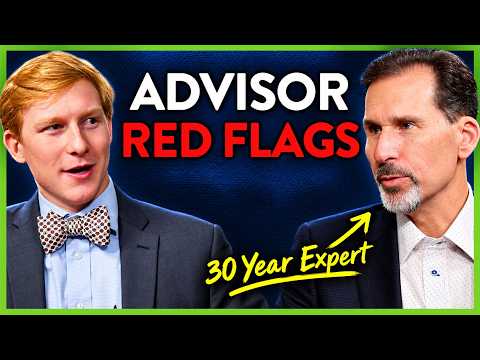
Your Financial Team Is Costing You BIG $$$
When your CPA, financial advisor, and attorney aren’t in sync, your investing strategy and personal finance plan can silently cost you serious money. In this episode, we reveal how fragmented advice…
Published August 6, 2025
Transcript
Phil, this is one of those episodes that makes you think maybe I ought to rethink who's on my team because the mistakes can be extremely costly. We're talking about from a tax standpoint and they could be a quarter of a million dollars.
Yes, you might have a team of professionals that are helping you, but the conductor has to know what they're doing as well. That was money literally that a match was struck, lit the money, and the money went up in flames. And you can't reverse that.
It's because of the people they hired. They thought they were getting good advice, but it was so uncoordinated. When they ask us the same question, our answer was different. What we gave them was the right answer. We may have just saved you thousands of dollars.
You hired a financial advisor, CPA, and maybe even an estate planning attorney, and you think you're covered. But what if I told you that the silence between those professionals was slowly eroding your wealth? Today we're talking about financial advisors, but more importantly, why having the wrong mix of financial input can cause major problems with your financial household.
Phil, you compare financial advising and wealth management to an orchestra, but what happens if the conductor never shows up?
The short answer is chaos. When you take great musicians, if they're not well aligned or they're not in sync, then you're not going to get the music that you expected. And that's really what the conductor is all about. So, they get all of those instruments to play well together.
And the problem with financial planning or wealth management and the reason I use that analogy, the orchestra without a conductor, is people very often have a good team around them but that team's not coordinated. It becomes fragmented and the planning rarely turns out the way that it should and opportunities are missed.
Let me paint a picture. So, a client has a financial advisor, a CPA, and an estate planning attorney, but none of them talk to each other. It's radio silence, so to speak. Does that sound familiar?
We see that so often. I've done this for 33 years, and I got to tell you, from the beginning to present, I see that scenario play out all the time. And so just this week, two days ago, we're meeting with a new husband wife client. They've just started their onboarding process with us.
And Spell, when we went through the initial meeting and then their planning session, they were getting advice from a CPA, okay, who they've worked with for years. By the way, this isn't a new relationship. They've been with this person for years. They were talking to a custodian or a wirehouse. Actually, I take that back, was through their 401k. Okay. Where the spouse had worked for 30-some years.
And so they had this planner, if you will, through the 401k plan. And those two people, the CPA and this planner, were giving conflicting advice. Same question was being asked of both of these so-called professionals and they were giving conflicting advice.
And so when they asked us the same question,
Mhm.
our answer was different from the two professionals that they hoped were trustworthy, that they could trust, I should say.
Yeah.
And so as it turns out, what we gave them was the right answer.
Yeah.
But that is a perfect example of how people think they have professionals around them that are serving in their best interest, but they're getting bad advice in a lot of cases or they're just being misinformed. Or each of those professionals, should they or if they talk to one another, maybe the two of them would have figured out that what they're telling that client was not going to give them the best result.
Yeah.
In this case, they simply didn't know what they were talking about. That's unfortunate, but that was the case here. But that happens a lot.
Yeah.
So, they had an orchestra without a conductor and so fortunately, they've hired our firm to be that conductor. And so, we'll get all those things handled. We'll get them back on track.
But I think the part that bothers me the most, Spell, is these are not small clients. People like this, they have millions and millions of dollars in some cases and when they make mistakes, we're talking a lot of money that you often can't fix it. You can't undo it once the mistake is made, you can't undo it.
And so it's very noticeable for people at that level, but even smaller investors or people of smaller means, the damage is just as bad for sure. It's a smaller amount, but the damage is just as bad. And my opinion is if you're getting the right advice and you have the right people on the team and they're coordinated.
Mhm.
Meaning there's a conductor, someone's putting this thing together so that everyone's in harmony, then you start to get a better result. The message here is that there's great advice, but great advice in isolation, when it's just one of those professionals giving advice, not communicating with the other, that advice in isolation may not turn out to be really good.
Yeah.
May turn out in such a way that it causes a lot of unintended damage.
Yeah. Phil, you mentioned something that I think is important for everybody to realize, but no matter if you're a multi-millionaire or you're just getting started, if you have people, multiple professionals giving you advice, one, you're going to want that to be coordinated because the mistakes, if there are mistakes that are made, can be extremely costly and the fragmentation across these professionals can cause you to make mistakes that you can't reverse.
So talk about the costs of, if you're getting advice from multiple professionals and that advice is not harmonized or being conducted appropriately, talk about the cost of that.
Well, I think the cost can be significant. We're talking about some of these mistakes from a tax standpoint could be 10,000. They could be a hundred,000. They could be a quarter of a million dollars.
I think you say it best, fragmentation, and we talk about this in the elements book that's coming soon. The fragmented part of it happens when these professionals start to give isolated advice. And so a CPA, and I'll say this about all of us as professionals, we all have a certain ego and so the CPA thinks they know best and the attorney thinks they know best and a lot of financial advisers, wealth advisers think they know best.
I'm just, I'm always happy to know that our team doesn't have that ego. We're happy to work with all of those people.
Yep.
Because without that coordination somebody's going to make a mistake. So when you talk about how much could it be, well, I'll give you another real life example. So we have a client in Charlotte, North Carolina, that very large client, to them they have the wherewithal to spend what they want to spend.
Mh.
So their wealth picture is really, really good. But they were making distributions, Spell, from a qualified account, and a significant amount, well into the six-digit range.
Mhm.
When they had other places they could pull money from where we could soften that tax and would have given them a much better outcome. Their accountant, their CPA never brought this up to them.
Yeah, they didn't know any better.
The CPA never brought it up and their wealth adviser or their financial planner, wasn't really a wealth adviser in this case, but a financial planner/broker years. Had worked with these people for, let's say, 20 years.
Wow.
And never brought up any of this in conversation. Never talked about tax savings. And these people are spending, Spell, about $45,000 of that distribution every year was going to tax. One change, once we took these people on as clients. We showed them one change and we changed that outcome.
It's pretty amazing what happens when you have a nice conductor who's been in charge of an orchestra.
That's, I think, what a lot of people miss is yes, you might have a team of professionals that are helping you.
Yeah.
But the conductor has to know what they're doing as well. The conductor better be really versed in the way everything is supposed to look and feel and sound, right? And I think that's a place where I find a lot of comfort in our team being expert across so many parts of the financial spectrum.
This case that I just laid out, that was avoidable from the beginning.
Yeah.
It never had to be that way. And so, as we looked back, the amount of money that they spent in taxes was unnecessary. What a costly mistake. Now, it didn't change their trajec, well, it changed trajectory. It didn't change their ability to live and they're not going to run out of money, right? But it was money blown. That was money literally that a match was struck, lit the money, and the money went up in flames. And you can't reverse that.
You don't have to work with us.
Sure.
But your people, your adi, your advisers, whether it's CPA, attorney, financial planner, wealth advisers, whatever you have, they need to be talking to each other every year and sometimes more than once per year, but at least once a year.
Yeah.
Because if the left hand doesn't know what the right hand is doing, mistakes are going to be made most likely.
It's true. It's true. I had a conversation earlier this week with someone who, they have a conductor, so to speak, and this conductor told them that they couldn't get money out of an IRA without paying taxes on it. Well, little did this individual know that's not necessarily true. If you're a certain age and you're, say for example, and we'll probably talk about this, but if you're philanthropically inclined, you can get money out of an IRA without it ever hitting a tax return. And this person didn't know that.
So, it's super important. I think the point that you make about fragmentation is a really, really good one and people need to pay attention to it.
I think one of the greatest concerns that people should have is, are they asking enough? Are they asking the right questions? Because they start trusting their advisor, CPA, whoever it is. And they expect them to know the right information, right? They expect that whatever that person says, if they say, "Well, no, you can't take money out of the IRA without penalties or tax," they take that to the bank. They assume or they take that as truth, right? Most of the time, we feel like even that most of the time those professionals get it right. But we see it every day.
Yes, we do.
Where people get it wrong. Just knowing what to ask.
Yeah.
Can make all the difference in the world. Unfortunately, we see it all the time with people that we interview to become a client of our firm. They sometimes don't know the questions that need to be asked and if they don't know, they don't know, right? So it's unfortunate, but those kind of things happen.
So I would encourage everybody watching this video, if you have a team, if you work with an adviser or advisors, you need to tell them, I want all of you talking to one another. I want you having a regular meeting so that all of you understand my goals as the client,
Mhm.
the opportunities that can be afforded to me through your professionalism, through your expertise. I want all of you talking to one another. And if you, the three of you or two of you or however many are involved, can't talk to one another, then you're fired. Right? That's the simple answer here. If they don't want to talk to each other and be coordinated, you don't deserve the fragmentation. You're paying for professional service. Why in the world would you accept that?
Phil, I can tell you're passionate about this and obviously our firm has lots of experience dealing with these types of situations and other professionals. We want to work in harmony with other professionals because ultimately it helps our clients get to where they want to go in the most effective way.
Here's the problem, Spell, real quick, and you're right. I get passionate about it because I hate to see people make mistakes.
I understand.
And it cost people a lot of money, big time. And they're paying fees to cost themselves a lot more money in mistakes. Silly.
Here's the point. All of us, we start our careers and we get pretty successful and those egos happen and CPAs have them, wealth advisers, financial planners, stock brokers, attorneys, everybody thinks they have the best answer. Well, I got news for all of them. It's not about you.
Nope.
It's about the client and everybody needs to check their ego. Bring the professionalism. Bring the expertise. Bring the knowledge, right? Put it together. Solve the riddle.
Yep.
Help the client. End of discussion. That's how it should work.
And I get frustrated when I find people that come to us or I sit down with people that come to us for the first time and they have a mess.
Yeah.
And it's not by their own volition. It's because of the people they hired. They thought they were getting good advice. And these people have given them advice, but it was so uncoordinated. They made bad decisions. And a lot of times they just get conflicted and then they develop paralysis by analysis. They don't know what to do.
Yeah. And that could be just as bad.
We'll get right back to today's show, but first I'd like to ask you a quick favor. If you're enjoying this episode, hit that like button and make sure that you're subscribed to our channel so you don't miss what's coming next. And hey, if something in today's episode has you wondering about your own financial plan, why not get a second opinion? Visit omnistarfinancial.com to schedule a consultation with one of our team members.
It's quick, it's easy, and it could make a huge difference in your financial future. Now, let's get back to the show.
One chord or one missed key can disrupt all the other instruments that are playing. Why is it so important, Phil, that the 10 elements of wealth management, they're going to be part of the book that you're putting out, why is it so important that they're coordinated? Why does it matter?
Every element represents a part of the journey of wealth management, the journey of building and preserving wealth. It's all of these elements. And Spell, the simple answer is that actions in one can affect another. And so when people have certain parts of their financial planning or wealth management put together, they can feel like everything is buttoned up tight, that it's well coordinated, it's all good. But if they don't have some type of pneumonic or some type of process to keep them on track and to alert them if action in one is affecting another, sometimes you won't know until it's too late.
So our elements, the reason they're so important is they create that framework. They ask the right questions. They present the right challenge so that everyone's thinking at all times. And we tend to see early where mistakes are about to happen. If you're not doing that, wealth management is complicated.
Extremely, Spell. There's more choice out there today than you've ever seen with investment types.
Yep.
With insurance types, risk management, qualified money, non-qualified money, philanthropy, how you give, lifestyle choices. There's so many things to think about.
How about the number of firms that you can choose from?
The number of firms, think about that, and they all operate on the surface the same way. Someone hears the word wealth management, financial planner, fiduciary.
Fiduciary.
Even some insurance agents hold themselves out to be a financial planner.
Yep.
Or you hear CFP or you hear a credential. Everybody says, "Oh, okay." Say, "Well, you do the same thing as my person." And the fact of the matter is, it's not all the same.
No, it seems like it on the surface, but when you go under the hood, you realize the engines are quite different. Some are much better than others.
It's true. It's true. The number of conversations that we have in a week, even the image on the screen right now, Phil, is double taxed. And that person's looks, he looks pretty upset.
I would be.
100%. 100%. And I know you have lots of experience with this. We've helped people move away from these wildly unorganized orchestras into a far more organized, beautiful sounding orchestra. But when you move someone from a position of relative chaos, and chaos I think is maybe used loosely, but when someone has a disorganized conductor or there isn't a conductor and they're being double taxed or they're paying taxes that they don't need to pay or they're pulling money from a non-qualified account when it should be coming from a qualified account or vice versa. Maybe it needs to come from a qualified account.
We have so many of those conversations. To drive home your point, yes, everyone looks the same on the surface, but if everyone did everything the way that, for example, we do it, we wouldn't bring on new clients every year.
No, we wouldn't have a seat at the table.
What do you say to that?
Spell, your point is beyond valid, right? We see that all the time, and it could be double taxation or penalties.
Yep.
It could be a 401k. We work with so many individ or business owners as well as individuals and families, but a business owner, for example, if they overfund their 401k plan, and I see this get missed all the time, and then people will call us and say, "Hey, can you help us fix this?" Right?
Right.
And we end up taking them on as a client. Usually, generally when we fix things, those fixes trans, they generally translate to a new client, right? If they're a good fit for us and we're a good fit for them. But if they overfund and they forget or they don't catch that overfunding and they don't get that money out of the plan soon enough, they're going to get walloped with a penalty, right? And it's unnecessary, but when you don't have the right team of professionals watching the fort at all times, it's easy for a spark to catch that fort on fire. And forts, at least in the old days when they were built of a lot of straw type material, they go up pretty fast.
Yeah.
And so it doesn't have to be that way, right? But I think Spell, we could go on and on about this. The fact of the matter is people need to be diligent, or I should say judicious, about how they're handling their money. And if they don't understand all these nuances and all the elements, then they need to be really circumspect at choosing the advisor.
And one that I hear all the time is, well, I've worked with them for so long or they're my friend. You better be sure that you understand how much that friendship is costing you, right? Because if it's the wrong advisor relationship, that friendship could be costing you a lot. And just because you've worked with someone for 10 or 20 or 30 years, it doesn't mean that everything is just right. And it doesn't mean that a second opinion is not beneficial.
100%.
Generally speaking, that's how all of our clients come to us. Usually, it starts with that second opinion. And after they're referred to us, we do the second opinion, and chances are occasionally we'll say we can't help, right? But most of the time it's not that way. So I think people need to be better informed because it isn't the same once you open the hood.
Yeah.
Financial advisors, wealth planners, wealth advisers, wealth managers, whatever you want to call them, there are differences, sometimes subtle, sometimes extreme, right? And you've got to know what to ask and you got to be vigilant when you're trying to find the right team.
Yeah. So, for sure. Phil, I want you to talk a little bit about some of the longer term clients that you've had and how the elements have affected those clients' lives. You've been at this longer than anybody at our firm, and you've developed extremely deep relationships with folks from all over the country, but you did it in a way that was maybe unorthodox, and I say that as a very positive thing, but you look at someone through a lens or 10 lenses, and that's the elements. So, what have the elements done to help improve our clients, maybe from a bad orchestra to a good orchestra, or how have you used them in the last 33 years?
Well, one, I can tell you that the elements evolved a lot because early in my career we didn't have them, right? We only developed the elements well into the 2000s, is when we had this epiphany and we said, you know what, there's got to be a better way. And here come the elements. And today they are fully developed and they really are the guide. They guide us and the client simultaneously through the journey.
I think about a client that we've worked with for a few decades and they live on the other side. We're in North Carolina, as most of our listeners know, but these folks are on the other side of the country. They're just a few steps away from them, they'd be in the ocean on the west coast. And so I think about the planning that we've done for them over the years.
Mhm.
And one of the things that the elements helped us figure out years and years ago, it had nothing to do with their education planning, but it had to do with education planning for their grandchildren. And all of their money was locked up in IRA. Everything they had. And I said to them, way back then, we were already talking about how much of those dollars really belong to Uncle Sam.
Yeah.
And I said, "Look, both of you are now retired. Lowest tax bracket you're going to be in, more than likely. Let's begin to work some of that money out of the qualified environment or out of a traditional IRA and let's get some into a Roth for the benefit of educating your grandchildren," which we knew was 20 years away.
Yeah. And the Roth is after tax environment.
And the Roth is after tax. So we get that money in it. It's never taxed again.
Yep.
Well, here we are 20 years later, and we were able to get that money out of the traditional IRA way back then at around 10%.
So, pretty low.
It was cheap. We got that money out because we had some losses. We took advantage of a few things in the tax code and we got them out for around 10%. That money today has more than tripled, and they are funding five grandchildren full education rides.
Right.
Full.
Which, four year degree, no, it's not cheap.
These children, it's about, each one of them, in fact, we have all of it modeled in their online planning with us, it's about $30,000 per child per year. Now, they're staggered for the most part. But all of that was set up years and years ago because we had the foresight to say to them, we can do this cheaper today. Let that money accumulate and then tax-free distribution. And that's what they're enjoying today. And there will likely be money left out of that big Roth, and that money never gets taxed.
It's great.
And they can then leave it to those grandkids or whoever they choose.
That's great.
And it never gets taxed. So that's just one example.
Yeah, that's a wonderful example. I want you to tell me about the OmniStar model, because this has by and large been your brainchild. Talk to us about the way in which we do things, or the way in which you think things should be done, which is how we do them.
Well, brainchild or not, I feel like I've had a lot to do with it, but I think it evolves. And as our team grows, it evolves because we get great minds in here. You're one of them. And so as those minds come, we all, think about it. Every year we start talking about what if we do this.
It's true.
And should we add that?
Yep.
That's really what makes our elements work. But as you well know, we have something called OmniCAP, and that stands for centralized advanced planning.
Mhm.
That is where it all takes place. The centralized advanced planning means we're way beyond typical financial planning. We're not just helping a person invest. We're not helping a person just look at a simple tax return. We're looking at every facet of their life as it relate, anything related to finance, and almost every part of life is. We're looking at all of that and we're capturing it in our centralized advanced planning technology. That is the framework, Spell. And of course underpinning all of that is the elements, right?
If you were to then pull back from that 30,000 foot view, you would essentially see a quarterback. All the players are there, the client.
Yep.
CPAs, accountants, attorneys, they have access to part of OmniCAP. They have access to it. And so there's things they need to see, and so we give them full access, and all of that being quarterbacked, if you will, is allowing that client to rest and rest easy.
Yeah.
Knowing that the team is coordinated. That's really what our centralized advanced planning is all about. It's not just the numbers. It's someone managing the process and making sure that every professional is talking to one another, that throughout the year we're advising the client, telling them what they need to know before it's tax deadline or before a mistake is made. It's forecasting so that we can begin to see what it could look like. And that's where the advice begins to really get beneficial.
If you wait until the last minute, Spell, as you well know, you get rushed.
Yep.
You make mistakes. Somebody loses when mistakes are made.
Sure.
We don't want it to be the client. We don't want it to be us.
No.
So, that means that centralized advanced planning, or our CAP system, has to be utilized. And as long as it is, we know our clients are going to do well. They have the greatest chance for success. Everyone's going to win. It's going to be a mutually beneficial relationship when we use that foundation.
Phil, this is one of those episodes that makes you think, "Maybe I ought to rethink who's on my team. Maybe I ought to dig deeper. Maybe I ought to get a second opinion from someone that I haven't known for 40 years or 30 years." Think, it doesn't have to be us.
No. But I can tell you unequivocally, without any trepidation, I'll say this to anyone listening, if you work with a CPA or a wealth adviser, financial planner, whatever they are, whoever they are, you need to be questioning everything.
I just finished meeting with a client, Spell, right before I ran into the studio, and client that's been with us for many, many years.
Mhm.
And he said something in the room that doesn't trouble me, but it reminds me that this is how a lot of people think. He said, I don't really look at a lot of this stuff. I rarely take notes when I come into a meeting like this. Fortunately, what he said after that was, "But I know you take great notes, and I know that I'm going to get a summary of this meeting, and it's going to tell me everything we talked about." And so, he depends on that.
But not everybody has that.
It's true. A lot of people go into an attorney's office or a financial planner's office, and we've been with them.
Yeah.
I sat with a client just a few months ago at their attorney's office and I watched no, not even a notepad on the table, no pen, no paper. Nothing was being noted.
Yeah.
Now, the attorney might have been taking notes. The point of the story is a few months later they're saying, "Phil, do you remember what was said? Things are not finished." They're having to pay additional dollars to get the attorney to talk to them again because things got missed. Fortunately, in those cases, we take a lot of great notes so the client doesn't miss things. That doesn't always happen, Spell.
I know.
And so that lack of attention to detail leaves people in a situation where they think they're getting good planning, only to find out when it's too late they're not. Right? So this is one of those shows where if you're not sure, maybe if you believe you are sure, you should still ask the question. Ask them for their Form CRS.
Yep.
Ask the questions how they're getting paid. What are they doing to coordinate your team? How often are they meeting with your CPA, or with your financial adviser if we're talking about your CPA right now? The attorney, how often are those three people, and those are the three cogs really, right? Or the spokes that make up the wheel, how often are they meeting? Are they talking to one another?
It's a great question.
And let them answer you. And if they say, "Well, gosh, we don't talk at all," you might need to let them know, hey, I want your meeting, because each of you controls a certain part of my life, and if it's not coordinated, probably not going to get the best result. Might get a decent result, but it won't be the best.
Right. We started the show, Phil, talking about radio silence across multiple professionals on your team. If there is radio silence, what should ring loud and clear in the back of your mind is how many dollars am I burning every year due to the silence? Silence is costly.
Look, advisors, attorneys, CPAs, wealth advisers, they cost a lot of money before you make a mistake.
That's true.
So if there's radio silence, Spell, to your point, if those people are not talking to one another and if you don't ask the questions and they're not coordinated, you could be spending a bloody fortune.
Yeah. So ask the question.
Well, Spell, this has been a great show. I sometimes forget how fragmented the planning process can become, and so I'm glad that we had this conversation. Think if our listeners will use this information to simply ask the questions, learn, get to know your advisers better and make sure they're talking to one another. You need to make sure they know each other better.
Yeah.
And so if you just take that, you're going to be in a much better position down the road.
We may have just saved you thousands of dollars. You're now armed with things to question. You're now armed with things to say to the professionals in your team, and we hope that you'll actually take action. Don't sit by idle when there's money burning.
It's a great way to say it, Spell. Hey, we'll see you next time on We're Talking Money.
This transcript was generated automatically and may contain errors in names, figures and terminology. The episode itself is the authoritative version.