25 Years With an Advisor, Zero Results (Why Your Financial Advisor Might Be Failing You)
How do you measure the true impact of a financial advisor on your family legacy? We analyze the long-term value of professional guidance.
Published September 9, 2026
Transcript
My question was simple. What value? What's the greatest value that advisor brought to your family over two and a half decades? I think the more concerning part is they couldn't really find an answer. That was the more concerning part. And it finally ended with something along the lines of they've managed my money pretty well.
Mhm.
And that is where I think a lot of people miss what real value is all about, because if that's all the advisor is doing, chances are a lot of things are being missed.
Yeah. When ultimately the answer was put back on the table to you and that, well, they've done a nice job managing my investments, what was your response to that?
That's their job, right? That's what they're supposed to at the very least. That's what they're supposed to do. If you can't get that part right...
Mhm.
...you might be in the wrong business.
Yeah.
I don't think they had anything to compare.
Mhm.
So, you don't know what you don't know, right? And so if you haven't compared it to something, then how would you know yours is good or bad, right? What you have might seem good, but it's because you know nothing else, right? And so if you don't, then you have to, and if you like the person and you trust the person, then I believe it leads you down the path of assuming that everything must be okay.
What did you immediately notice about this individual or this case's estate planning?
Didn't have a will. No planning documents whatsoever.
When you hear that, yet you also hear that this has been a great relationship with this adviser for 25 years and everything is perfect, what do you think? And what do you say?
I say one, shame on the adviser, because if that adviser is really holding themselves out to be, cliche, but a holistic planner, someone who's there looking out for all the things. Yeah, I'm glad that advisers will show up for a birthday party or a funeral or a wedding.
Mhm.
But where are you when those fundamental, the most basic components are getting missed? Where are you? Now that advisor is not an attorney.
Yeah.
Right. They can't write the will. But you know what they can do? They can orchestrate that will getting done. They can have that attorney in the room. They can set those meetings and they can reinforce the importance of those documents and they can implore their client to get it and they can stay on them until it's done.
Yep.
That is what an adviser does. An adviser does the tough things. They give you the tough questions. They make sure that you are responsive when it comes to the things that can be landmines or roadblocks or, as we call them, blind spots.
Phil, one of the things that I want to shed some light on is that this individual said that the advisor showed up when their parents passed away. And that's a great thing. You're grading this advisor on whether they've looked a tax return and how expensive the funds that they're using are. Someone listening might say, "Well, their advisor showed up when it really mattered." What would you say to that?
Death is one of the most difficult things that we all have to face.
Mhm.
It's easy from an emotional standpoint to feel like, well, someone showed up, and so that feels like the right thing. And in a lot of ways, it is. I've been to a lot of client funerals, unfortunately.
Yeah.
And the families appreciate it, but at the end of the day, they should not grade me on that.
Yeah.
What they should grade me on is the efficacy of how we handled their finances, and did we get them to the best place possible with the least amount of cost and risk? Did we get them where they were trying to go? And did we help them realize when they were trying to go somewhere, it might be the wrong place? Were we able to take them through those parts of life? Yes, we're going to be there for a funeral, but that's a piece that is expected.
Mhm.
And that anybody worth their salt with a heart is going to show up.
Yeah.
But that isn't where we get graded, right? Because showing up for a person's funeral doesn't guarantee that I'm going to take good care of you on all the other things.
Yeah.
And so I don't want that to sound like I don't have respect for that. I do. I think it's really important. But that's not how you grade someone who's handling your wealth.
Someone watching right now might just say, "Well, this is OmniStar's way of getting me to just fire my advisor and hire OmniStar." And you know that this is a sales pitch. Why is that not the case?
Well, fortunately, we don't want everyone, right? The last thing we want is for anyone watching an episode or coming in for a discovery... We're not all things to all people, right? And so we don't start out believing that because we sit in front of someone or take a call that, oh, this is the next client, right? That's not how we view this, right? And so I think that's important for a couple reasons. We are okay if we don't take on every person as a client. Secondly, it's why we charge for a second opinion.
Yeah.
Because we want to start unbiased and we want to get paid for our time, and we put a lot of work into these plans. We put a lot of effort into these, the effort, the time, the human capital. It doesn't come for free, right? What I want is for everyone to get their financial house in order. We can't serve everyone, nor do we want to, right? But we can certainly, after 34 years of doing this, we know where the broken parts generally happen. And if we can expose that for someone, you don't have to work with us.
Yeah.
But you deserve to know. That's why you can take the plan and walk.
Absolutely. Yeah. That's a good point. All right, Phil. So, someone's watching this right now, what's the one question they should go ask their CPA or their adviser this week?
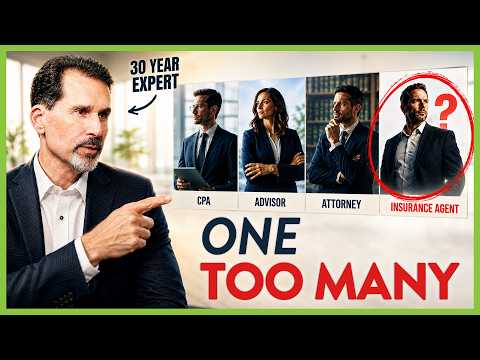
So, if they're going to ask their CPA a question, I would ask my CPA, what things inside of the tax code today are affecting me that we haven't talked about? What are those things?
That's great.
What are they? Because most CPAs, they do a tax return, you sign it, they file it.
Yep.
But they need to have a deeper conversation with the client.
Mhm.
Ask them what inside of the tax... because we had a lot of changes in the tax code.
It's true.
And if they can't give you two or three things, they probably don't know the changes in the tax code.
Yeah.
But I'd ask that question.
Yeah. They're going to talk to their advisor. What's the question? And this is someone they've worked with, right?
Yeah. Okay. So, if they're working with an adviser, I would ask that advisor, what is the one risk that you see me taking right now that I need to change because it will affect the rest of my life? What is that risk?
Be a great question.
And if that advisor can answer it, good for them. But there's a follow-up question.
Yes, there is.
When were you going to tell me?
Yep.
When were you going to tell me? Did I have to ask? Because sometimes advisers don't want to say anything because they believe it might offend. But you ought to ask that advisor, what's the one thing that you see that you consider a risk that I need to change?
Yep.
See what that advisor says.
Okay. To either of those, so the CPA or the adviser, you just laid out some great questions.
Great questions.
If people take those to their adviser or their CPA, you're going to have some people put on the spot pretty quickly if they're not used to doing what we do.
Probably some advisers that won't like me.
They're not going to like you.
That's okay.
Last thing. Which of the 10 Elements, and this is specific to the case that we talked about, which of the 10 Elements ran into one another in this case?
I would say that there were three elements here that were literally flashing.
Yeah.
So, one, the estate planning, because they didn't have wills or legal docs.
Yeah.
The second one was investment management.
Mhm.
Because when we looked at their statements, we immediately saw one, advisory fees, two, mutual fund fees.
Yeah.
That's a potential problem. Certainly not the most efficient way to do it.
Yeah.
The third one was cash flow, and their cash flow, not bad, but the way in which they were approaching cash flow, they're missing certain things that would improve their cash flow and allow them to live a better life, right, and a more predictable outcome with their money.
Yep.
So I would say it was those three. You were in that meeting. What did you think?
I would say that those three were certainly the flashing lights. When you're going down the road and you see the flashing lights, those would be the three that would be primary. And of course the one that's always at the center, it's almost like the nucleus, is lifestyle.
Lifestyle, right?
Yeah. Because they all drive that one and it drives everything else.
Yep.
Everything gets affected by lifestyle, and it was really their lifestyle that I think probably drove them towards us, because they wanted a second opinion and a lot of it's hinging on their lifestyle.
Yep.
So, I would tell you that those four, but primarily the three that you mentioned, were the collision pieces. Because like you mentioned at the beginning, if the elements are not coordinated and you're not paying attention to each of the elements, not all 10 apply to every relationship, but if you're not paying attention to the ones that do apply to you, or you take your eye off the ball, taking your eye off the ball, that ball could zip by you and crash three of your other elements, and then that can be very costly.
That's the risk.
Yeah. Let's say that someone handed me, or you gave me, that report card 10 years ago. Do you think that today, if I came into your office, I still wouldn't have a will and I still wouldn't have my advisor looking at my tax returns and I still would have problems with my cash flow?
Never say never, because the client is the boss at the end of the day. That's who we work for, right? We're not the boss. We bring the ideas. We bring the advice, we help implement. That's what we do. What I can say is that if I have a willing participant who wants to improve, they want to improve and they recognize by their own volition that what we've identified are things that need to be improved. If I've got that willing participant, then I can tell you unequivocally that two years later, five years later, 10 years later, you are going to be better off.
And I don't say that as a guess. I say it because I've got family after family after family after family after family that we've worked with for decades. And it is quantifiable. I can look at their report card from the beginning and I can see what they look like today, and I can say unequivocally that their financial house is not a little bit better, it's a lot better, and they've lived a better life as a result, and they have a future that they're proud of, and they have everything in place to see their next generation and beyond be taken care of in a way that brings them a lot of joy. I can see it. That's what we do. So, I can tell you, yes, you'd be better off if you were a willing participant.
If you enjoyed this, click or tap the screen now to watch the full podcast episode. Also, make sure you're subscribed so you don't miss any of our upcoming videos.
This transcript was generated automatically and may contain errors in names, figures and terminology. The episode itself is the authoritative version.