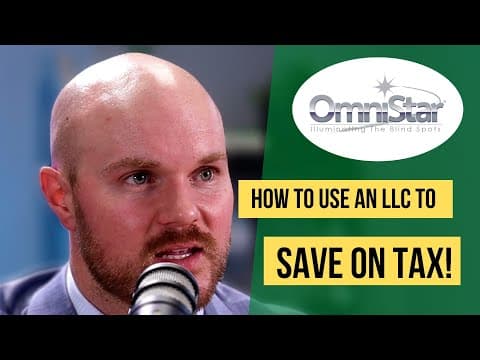
Are You A Landlord? Here's How To Protect Your Money with an LLC
We are diving into the powerful strategy of using Limited Liability Companies (LLCs) for rental property ownership, equipping you with the knowledge to safeguard your assets and minimize liability.…
Published August 18, 2023
Transcript
Are you a landlord who wants to protect your personal assets from potential lawsuits? Or maybe you're considering investing in rental properties and want to minimize your liability. Well, using an LLC just might be the perfect solution. When they are structured properly, stepped up basis and estate planning are built-in bonuses. Stay tuned.
Welcome to We're Talking Money. I'm Phil Clark, wealth advisor and founder of OmniStar Financial Group. Today I'm diving into the world of property ownership and the use of limited liability companies, or LLCs. If you're considering rentals, maybe you already have rental property, or you just want to learn more about the benefits of LLCs, you're in the right place.
Before we go any further, I want to thank all of our viewers, new and returning. We so appreciate your support. It's helping us grow the channel, and we're well on our way to our 2023 goal of 1 000 subscribers. So thanks again, we appreciate you being part of this growth story. Now let's get into it.
When it comes to building wealth, real estate and rental properties, they almost always play a role. Sometimes real estate investments are planned, and quite often they are not. For example, you might be planning to purchase a new home, and instead of selling your current residence, you might choose to rent that property. This is a widespread practice that often creates an investor's appetite to own more real estate. Best of all, it's pretty simple.
On the other hand, rental properties come with a fair share of liability exposure. Now, you cannot eliminate liability, but you can do certain things in such a way that personal assets can be shielded from lawsuits or any claims against the property. We get phone calls about this all the time, not to mention our existing clients are asking similar questions. That is, should I set up an LLC for my investment properties to protect my personal assets?
Adding another layer, they've already bought the property, and usually it's in their name. Now, that's not the end of the world, but we prefer you establish the LLC prior to making these purchases. Just like a living trust, assets must be transferred to the entity instead. However, investors somehow come to believe that just setting up the LLC is going to somehow protect the assets magically. Well, it doesn't work that way.
If you think about it, those properties, they're now owned by you personally. Creating an LLC doesn't automatically attach it to the property. You're creating an entity, and that entity therefore needs to own the property, and it needs to do the business, if you will. Your purchase contract or your purchase agreement of sale, the deed, and any financing, all of that must be in the name of the LLC.
Now, this brings up a few potential, not absolutes, but potential hurdles. If you're planning to finance the property, your loan will need to be in the name of the LLC. If you already purchased the property and you're holding a mortgage, that mortgage will need to be transferred to the LLC. Now, this is easier said than done. In fact, I suggest if you're going down the path of buying some property, or you've purchased property and you now want to get it in the LLC, contact your banker before making any moves. Something called a due on sale clause could kick in, or could be triggered. That's not a good thing. In other words, if due on sale occurs, that means you've got to fully fund the note or pay off the loan.
By forming an LLC for your rental property, you are creating a separate legal entity that shields your personal assets from any potential lawsuits or claims that may arise from the property. Now, of course, things like negligence, nothing's going to protect you from that, so just be aware.
Now let's talk about the advantages. If a tenant sues you for some type of injury, something that would fall into what we term as liability, your personal assets, like your home or savings, they need protection. And yes, insurance, it can be a tremendous help, but lawsuits can often exceed your insurance limits. That's why LLCs are preferred. It's why so many of them are used today for rental property.
Now, once you decide to go the LLC route, you might be asking, is one LLC enough? Well, maybe, but I will say that I encourage one LLC for each property. That is, if you have multiple properties, don't throw them all in the same LLC. Now let's say you have three rental houses, for example. The first house is owned by LLC number one, the second house is owned by LLC number two, and the third house is owned by LLC number three. If a tenant slips or falls and becomes injured at house number one and subsequently sues LLC number one, your properties owned by LLC number two and LLC number three, they're protected from that lawsuit. In addition, your income and expenses for each property sits within its own bank account. It is much easier to see which one's more profitable.
On the other hand, say you had one LLC that owned all three of these properties. Now, bookkeeping alone would be much more difficult, and every property in the LLC is potentially exposed to much greater amounts of liability. In fact, that example that I gave you, if all three of those properties were in one LLC and you were sued, all three properties are potentially exposed to the lawsuit that obviously came from only one of the properties.
Advantages of using LLCs goes well beyond liability protection and immediate tax savings. Estate planning, it's often thought of as a technique that would only use things like wills or trusts, and that is true. But did you know that LLCs can provide a number of opportunities? Things like stepped up basis, estate freezing techniques, which is something that once was only available in something referred to as family limited partnerships, much more complicated, much more expensive to administer, and then gifting. And this just names a few. So for families who want to maximize their hard-earned wealth, LLCs just might be worth a look.
Now, one side note. I want to mention a common mistake that we often see. In some cases, the owners of an LLC might elect to have the entity taxed as an S corporation. If you have rental properties, that's probably not what you want to do. The entity does not pay tax in this case. Instead, it reports that net income annually to the owners, who will then pay the tax due. At the death of a stockholder, however, that stock would get a stepped up basis, that is, the stock of the S Corp, but the land or property inside the S Corp would retain the historical basis, and a large capital gain will eventually occur. Of course, that is if the property is sold. That's a mistake that can easily be avoided. In other words, you want to simply let it be taxed as an LLC, which the default is a partnership.
So how can you get started if you choose to go this route? Well, to set up an LLC for your rental properties or investment properties, you'll need to follow a few simple steps. First, you want to choose a unique name for your LLC that complies with your state's regulations. Then you file the necessary paperwork, typically known as articles of organization, and you're going to do this with your state's Secretary of State office. You can usually find that very easily by doing a search on the web, and most of this can be done direct on their website. Now, in North Carolina, you can expect to establish an LLC for a very small cost of 125 dollars, and the cost for maintaining that LLC is only two hundred dollars per year.
Once your LLC is established, make sure that you operate the rental property in the name of the LLC. Now, this means signing leases, contracts, using the LLC's name. None of that should be in your personal name. Remember, the purpose of real estate investing is to make money and enjoy your life. If you're spending all of your time managing and organizing paperwork, life all of a sudden won't be so much fun. On the other hand, probably more fun than being sued without the right protection. Think about that for a minute.
Now I'll wrap up with a thought on how many LLCs you should own. Many people ask us, is one enough? Should I have more? Again, my rule of thumb is simple. If you own 10 or fewer properties, one LLC for each is a good setup. It's a great place to start. This layout is manageable and costs are reasonable. Now, when you move to a level of 11 or more properties, you might consider some more complex ways of doing your real estate ownership, and you might consider something called a series LLC. Now, some states allow this series LLC, and they are a highly effective way to keep the chaos of multiple LLCs with multiple assets to a minimum.
Finally, keep your personal and LLC finances separate. Do not co-mingle them. Very important. Open a separate bank account for your LLC or LLCs, and use it exclusively for the income and expenses related to the property or properties owned by the LLC.
In conclusion, using an LLC for your rental properties, it absolutely provides valuable asset protection and liability minimization. It's a smart way to safeguard your personal assets and enjoy the benefits of passive income, i.e. real estate investments.
Thanks for watching this episode of We're Talking Money. If you found this information helpful, please subscribe to our channel for more valuable insights and information on growing and protecting your wealth. Be sure to like, share, and ring that bell so you never miss an episode. I'll see you next time when we're talking money.
Thanks for joining us on We're Talking Money. Be sure to visit us at omnistarfinancial.com, where you can learn more about how we provide value to our clients. So subscribe to the show and our newsletters, and drop us a line with topic suggestions for upcoming shows. If you enjoyed the show, we would appreciate you passing it on to a friend and providing a rating on iTunes.
This podcast is a publication of OmniStar Financial Group. The content is developed from sources believed to be reliable and accurate with all information. The information in this material is not intended as tax or legal advice and may not be used for the purpose of avoiding any federal tax penalties. Please consult legal or tax professionals for specific information regarding your individual situation. The opinions expressed and material provided are for general information and should not be considered a solicitation for the purchase or sale of any security or service provided by OmniStar. All expressions of opinion reflect that of the authors and are subject to change. Any distribution, use, or copying of this podcast other than the intended recipients is prohibited.
This transcript was generated automatically and may contain errors in names, figures and terminology. The episode itself is the authoritative version.