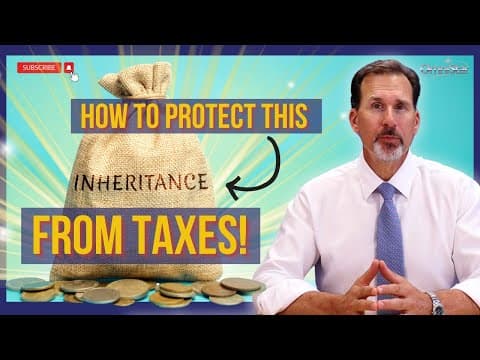
The Secret to Creating Generational Wealth with a Dynasty Trust
We're sharing the secret to creating generational wealth with a dynasty trust. By creating a dynasty trust, you can ensure that your family will be able to continue to enjoy the benefits of your hard…
Published December 7, 2023
Transcript
Maybe been around someone that is referred to as a trust fund baby, you can rest assured they're probably talking about a dynasty trust or something very similar. One of the largest advantages for a dynasty trust is you're only receiving income, which means the principal, or the portfolio in this case, can continue to grow. The whole idea here is to allow that wealth to build and never be estate taxed. Now, protecting those assets from creditors, etc., because they're owned by that trust, that's another big, huge, huge advantage.
Welcome back to We're Talking Money. I'm Dustin Hocken.
Phil Clark, OmniStar Financial Group. Recently in client meetings we've been discussing dynasty trusts, how they work, whether or not they fit into clients' plans, and how they can create generational wealth. Everyone wants to know how you do it. The dynasty trust is a great place, Dustin, to make that a reality, but it takes a lot of understanding. These are not simple trusts. They're different from the basic trust that you hear so many people talk about.
But Dustin, before we get started, let's make sure that our subscribers are welcomed back, and for those of you who are not a subscriber, subscribe. We're bringing out new content every week to help you make better financial decisions.
Generational wealth is a hot topic these days. We hear it all the time, and who doesn't want that? Why wouldn't you want to pass down hard-earned assets from generation to generation to generation? Imagine if you're two or three generations above and your great-great-great-grandchildren are still talking about the difference that you're making in their lives. But the problem lies with how do we make sure that these hard-earned assets aren't spent down and wasted by one generation making bad decisions.
Goes back to the shirt sleeves to shirt sleeve syndrome, or what we've all heard about. It's that second or third generation, Dustin. They bring all this money into their household and they don't do a good job spending it. Before you know it, it's gone. Either they got in trouble with creditors, they just made bad decisions. And it's not just third generation, by the way. It a lot of times occurs around the second generation; third generation just finishes it off. So it's very important that we avoid that, otherwise generational wealth could never happen. But the dynasty trust helps us avoid that, because once it's in the trust, no one is getting everything out of the trust. Rather, they're just getting income. So much better play.
If generational wealth is something that you aspire to create, we're going to show you how to do it. So what is a dynasty trust? Well, a dynasty trust is created to pass wealth from generation to generation to generation without incurring any transfer tax or estate taxes. The proposed tax rate in 2026 is 45%, and the exemption is $7 million per spouse, or for $4 million for a married couple. So if your estate is larger than 14 million, anything above that number is taxed at 45%, and this is what a dynasty trust is designed to avoid. Money that's inside the dynasty trust continues to grow and grow and grow and pass from generation to generation to generation without ever having to pay that 45% estate tax.
That's a big change from right now, though, Dustin, because today that number is almost double that per person. Right now it doesn't affect a lot of people, but if it sunsets and no one changes that legislation, we might have a real set of problems to deal with.
Yeah, imagine going from 24 million to 14 million. And what sometimes people don't understand too is life insurance is also included in that estate. So if you have a two3 million life insurance policy and it's owned in the estate, well, that's going to be included in that total value. So taxes can play a massive role in spending down the wealth from generation to generation to generation, and that's why a dynasty trust is so effective.
Such a good point about the life insurance. I know most of you that just heard what Dustin said, you're thinking, wait a minute, life insurance is tax-free. And you'd be right, it is income tax-free, but it is still included when they begin to value that estate. So if there's a 5 or 10 million life policy owned by, say, the grantor of a trust, and they owned it at the personal level, that's 10 million or 5 million, whatever the face amount was, that's included in the value of that estate.
A dynasty trust is a type of irrevocable trust, so the grantor puts assets into the trust for the benefit of their beneficiaries, managed by a trustee. Now, the rules are created by the grantor. They can either be very strict rules or they can be very lax rules when it comes to the principal of the trust. Like Phil mentioned earlier, a dynasty trust, the principal will stay there and the income will be paid out to the beneficiaries.
With the dynasty trust, because it's irrevocable, as soon as the property is in the trust, the grantor no longer has access to the assets. That's a good and a bad. So if you don't want to lose control of your assets, this might not be for you. But if you're okay removing assets from your estate and the goal is to reduce tax or eliminate tax for generations to come, then dynasty is something you can't be without.
So this dynasty trust, once established, it is governed by the trustee. And so when you've maybe been around someone that is referred to as a trust fund baby, you can rest assured they're probably talking about a dynasty trust or something very similar. They're living on income that comes from these trusts, where someone did a really good job of building wealth and seeing into the future, knowing and recognizing that people can spend, and sometimes they spend quite frivolously. And so they've built protections for all of this wealth that they generated so that it continues to give.
And that income that Phil is referring to in the dynasty trust, it might not seem all that significant, but just imagine a portfolio, let's say $10 million, and if a portfolio manager can only earn 4%, that's nothing out of the realm of possibility. 4%, pretty conservative. Well, that's $400,000 a year of income that this trust is distributing to the beneficiaries. So if there are four children, it's $100,000 a year, $88,000 a month coming out of the trust. Keep in mind, if you receive this income, you will have to pay taxes on the distribution. But like our portfolio team always says, if I give you $100 and you have to give me back 40, is that a good deal? Hey, if I got to keep 60, that's a pretty sweet deal.
One of the largest advantages for a dynasty trust is you're never tapping into the principal unless the grantor wants to give access to the principal to the beneficiary. So you're only receiving income, which means the principal, or the portfolio in this case, can continue to grow. So in the last example we talked about $10 million distributing $400,000 a year. Well, imagine the next generation. Let's say 10, 20, 30 years have passed and we were conservatively investing the money. Well, now there's could easily be 20, 30 million, and now we're talking about $800 to $1.2 million of income that's going to be flowing out of the trust every year.
The whole idea here is to allow that wealth to build and never be estate taxed. That's one of the greatest parts to a dynasty trust. It's a huge benefit. Now, protecting those assets from creditors, etc., because they're owned by that trust, that's another big, huge, huge advantage. But it's the tax. Some of these beneficiaries, by the third or fourth generation, or fifth, they could have huge incomes, and that trust is still intact, still growing, still creating great, great wealth, or generational wealth, as they call it.
There you have it, a lot of good information about dynasty trusts. But here's the question: is it really right for you and your family? Well, the answer is it depends. But if you're serious about generational wealth, it's not as simple as leaving something to the next generation. Generational wealth requires family governance. It requires diligent planning and a lot of dedication. But if that's what you're up to do, call us. We'd love to help. We can help you find the right attorney who specializes in dynasty trust planning, and we can show you the best ways to maximize wealth.
You don't have to be royalty to do a dynasty trust. You simply have to be somewhat wealthy, have some money, and a desire to create real generational wealth. If those things fit you, dynasty trust just might be a great play.
Be sure to like, share, and subscribe to our YouTube channel. Helps us have greater reach, helps you make better financial decisions. Phil and I, we put out videos like this every week, and you never know what idea we might bring to the table that could be a game changer for you. We'll see you next time on We're Talking Money.
Thanks for joining us on We're Talking Money. Be sure to visit us at omnistarfinancial.com, where you can learn more about how we provide value to our clients, subscribe to the show and our newsletters, and drop us a line with topic suggestions for upcoming shows. If you enjoyed the show, we would appreciate you passing it on to a friend and providing a rating on iTunes.
This podcast is a publication of OmniStar Financial Group. The content is developed from sources believed to be reliable and accurate with all information. The information in this material is not intended as tax or legal advice and may not be used for the purpose of avoiding any federal tax penalties. Please consult legal or tax professionals for specific information regarding your individual situation. The opinions expressed and material provided are for general information and should not be considered a solicitation for the purchase or sale of any security or service provided by OmniStar. All expressions of opinion reflect that of the authors and are subject to change. Any distribution, use, or copying of this podcast other than the intended recipients is prohibited.
This transcript was generated automatically and may contain errors in names, figures and terminology. The episode itself is the authoritative version.